An examination of performance, duty, identity, and impermanence through a survey of preserved Japanese theater costumes and garments
Cloth keeps changing long after we are done with it. Indigo abrades along a fold. Linen softens under the hand. Colors deepen, or go. A garment outlives the person who wore it, and then, eventually, the language it once spoke fluently becomes difficult to read.
The flower scatters.
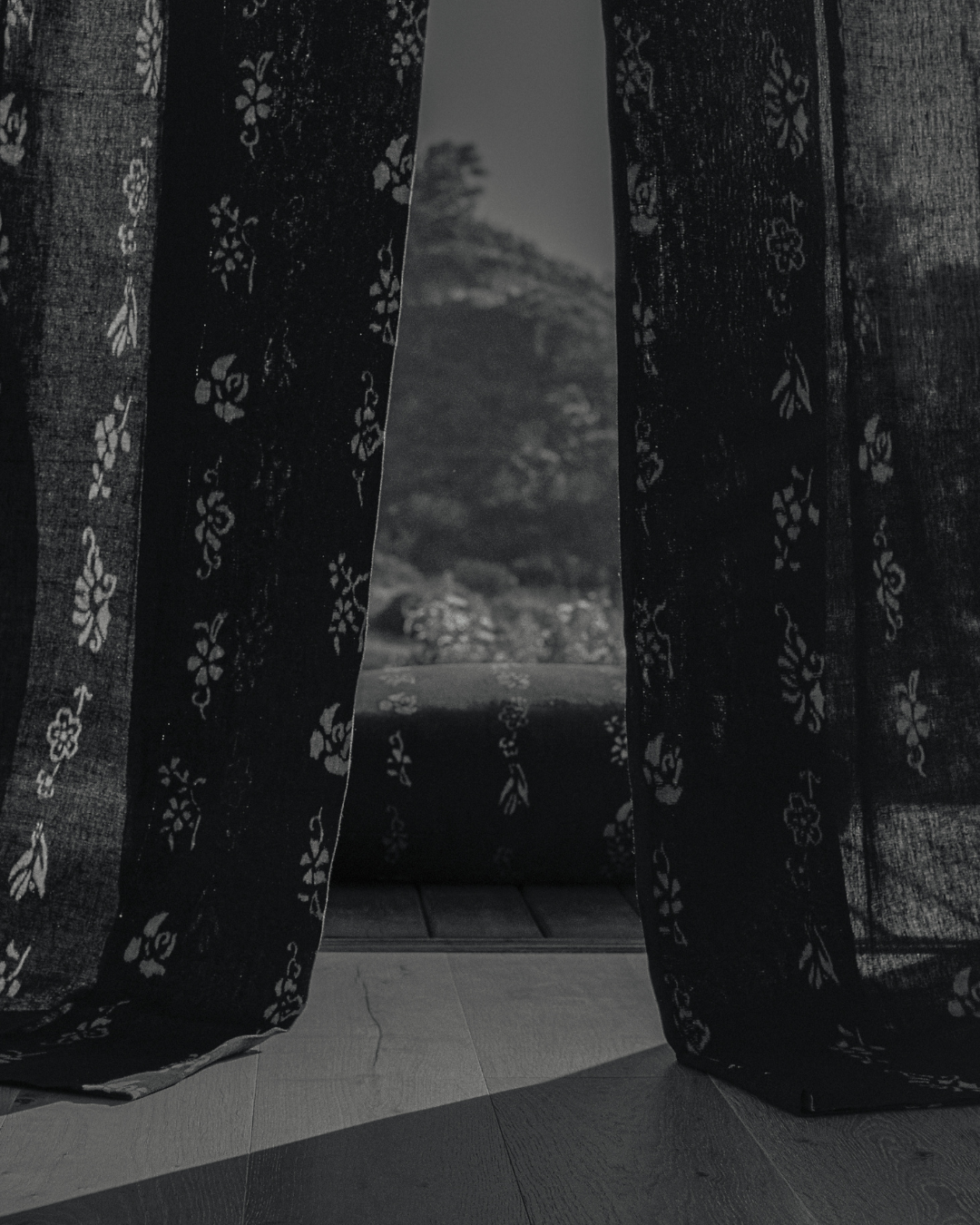
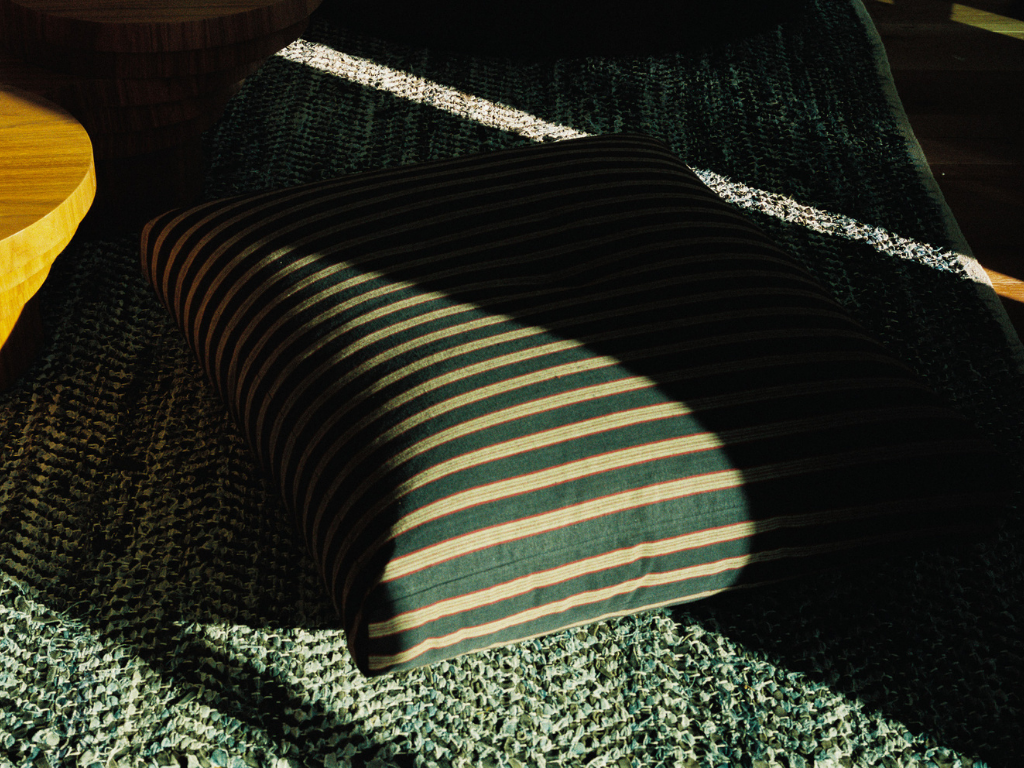
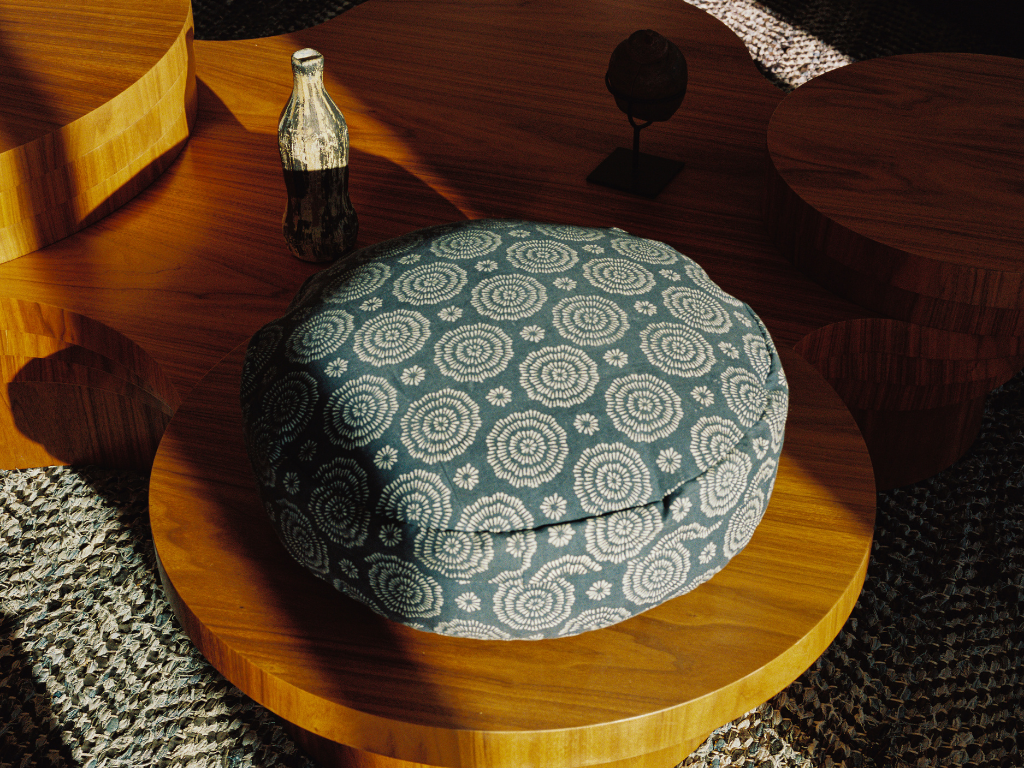
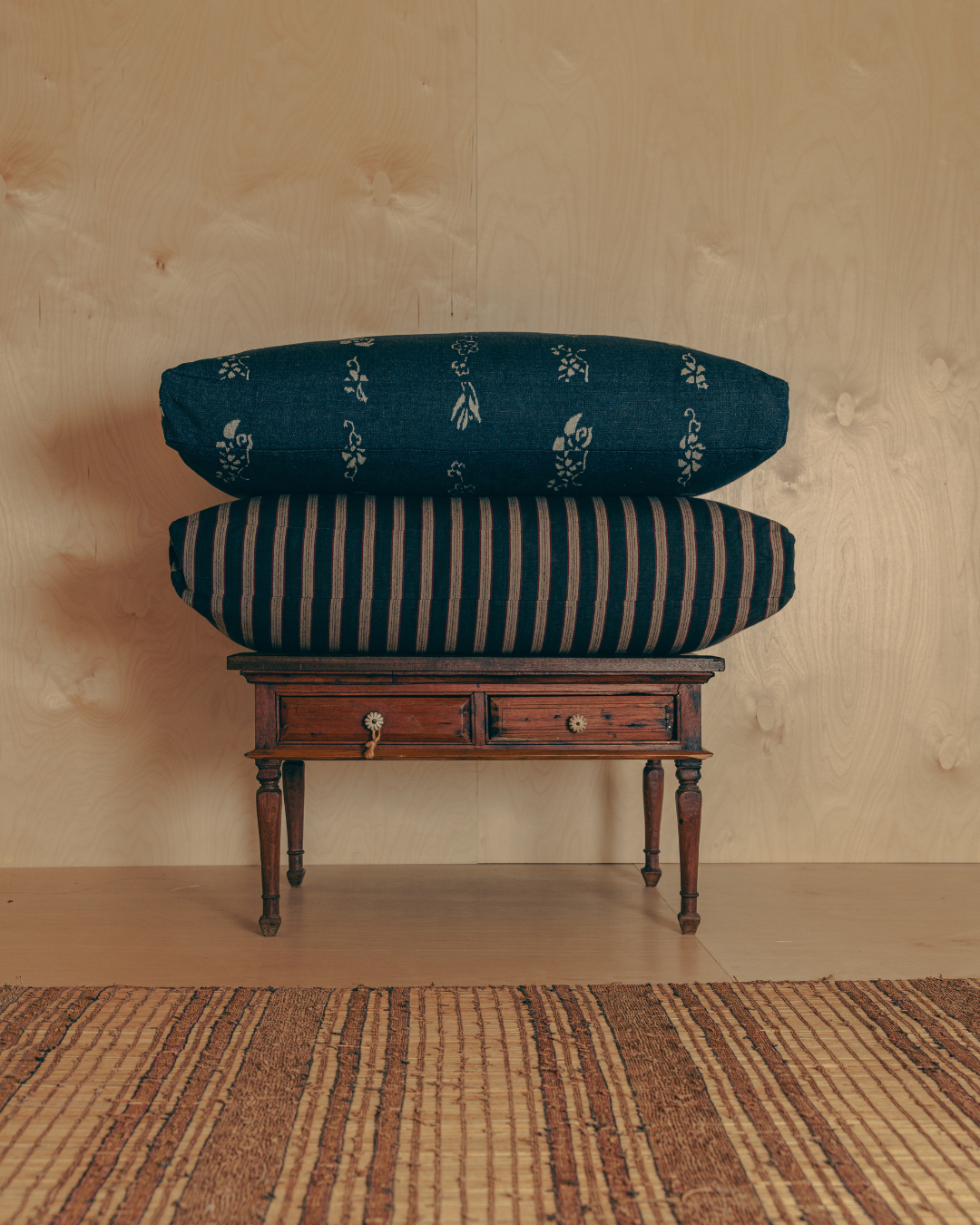
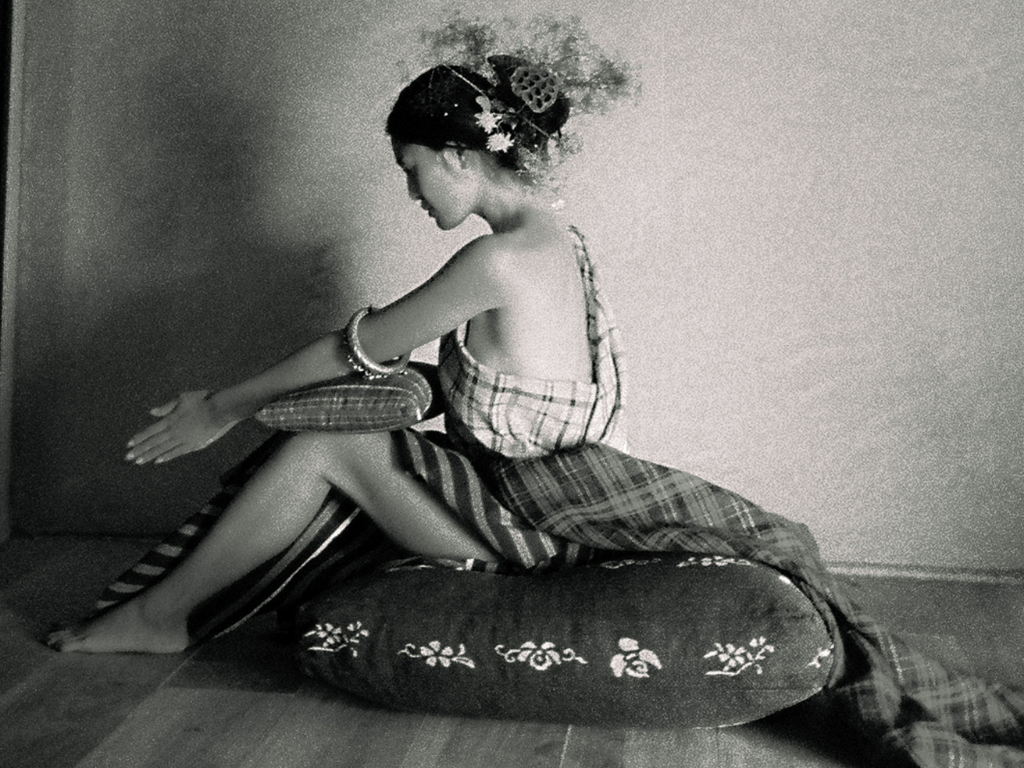
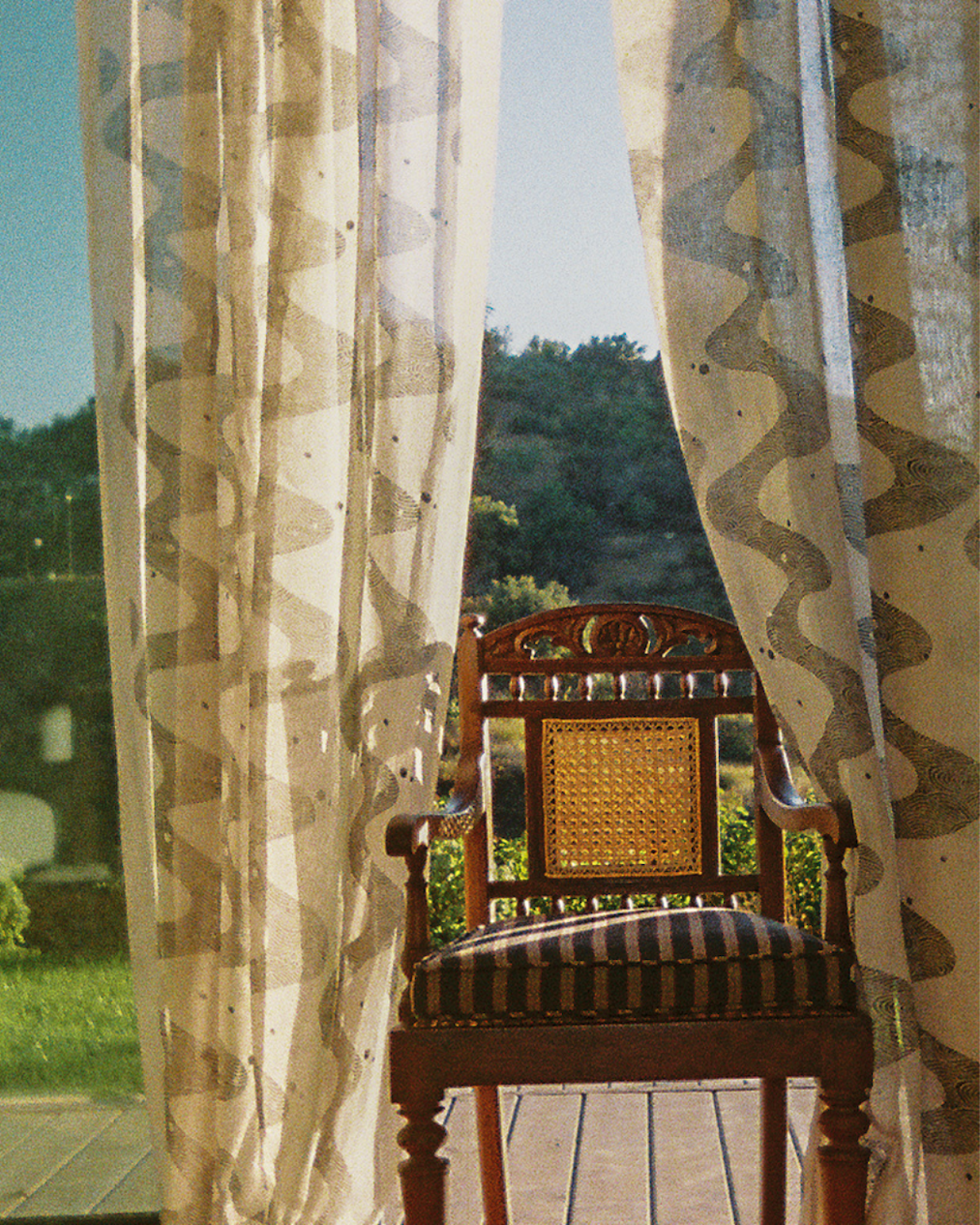
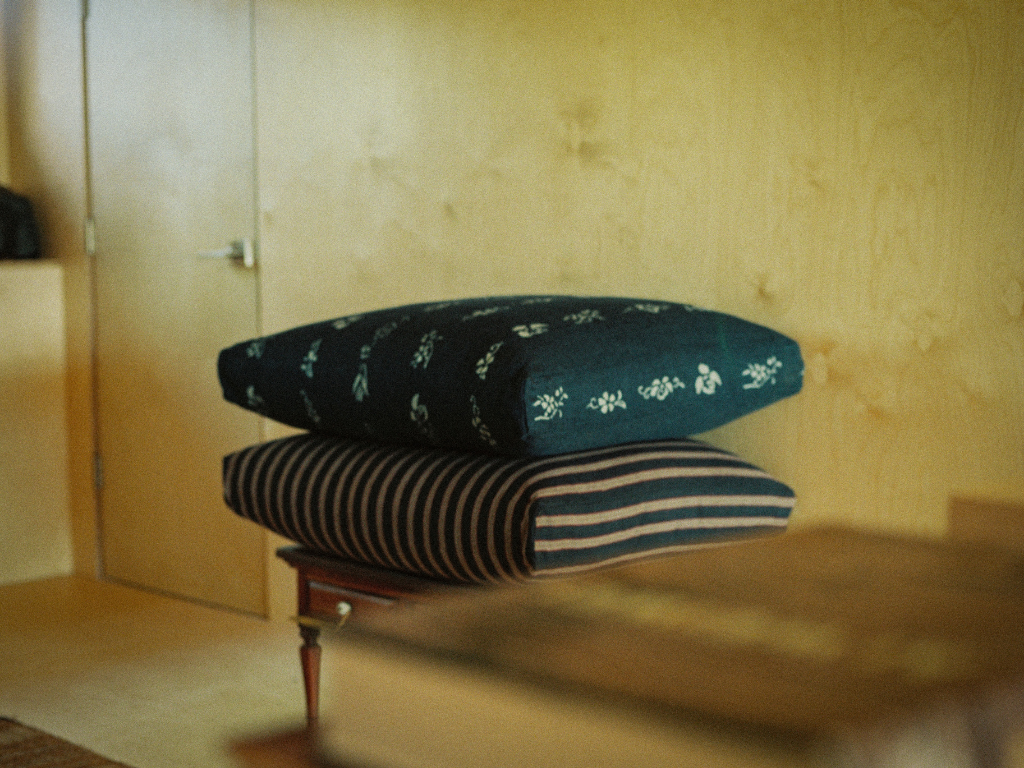
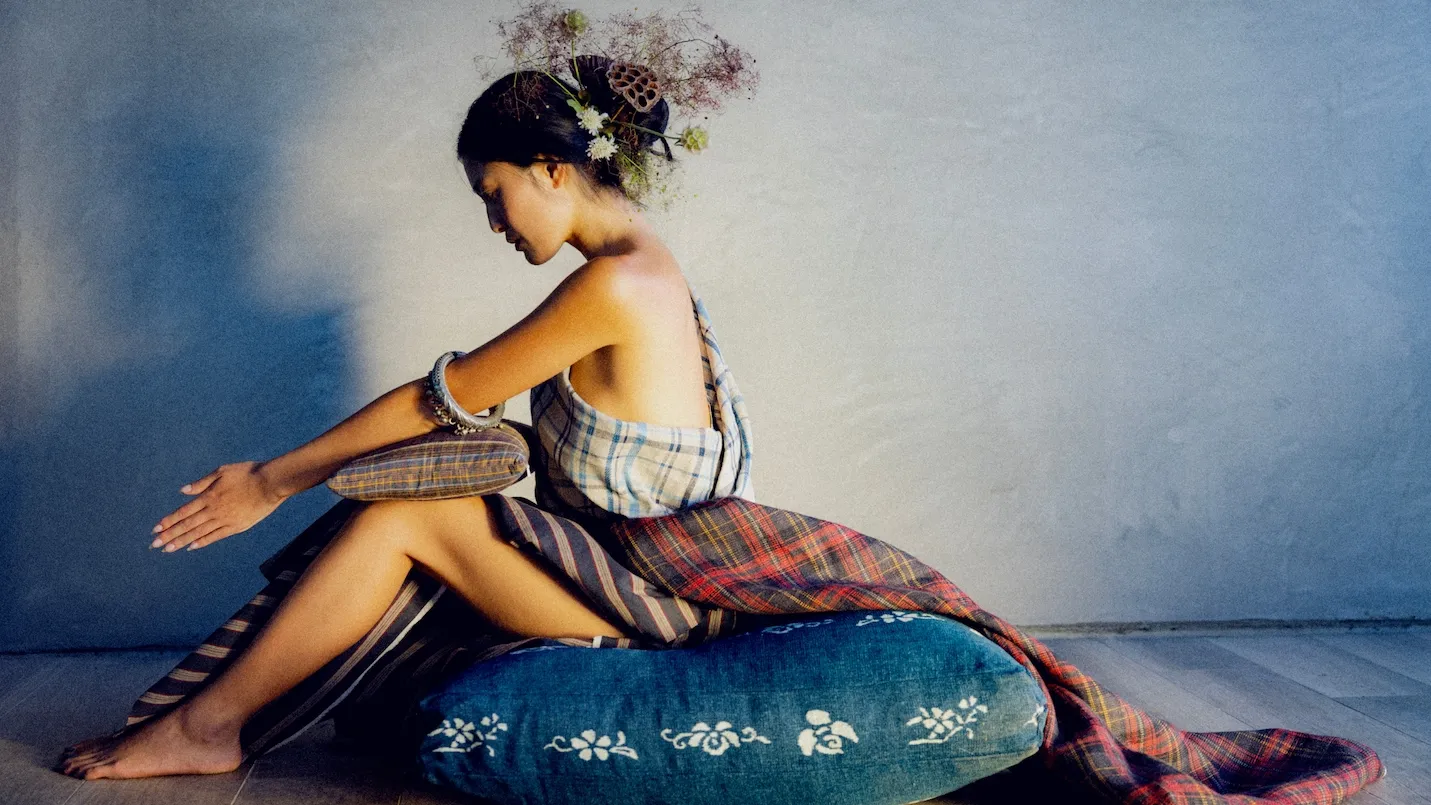
The textiles in this collection are based on historic Japanese cloth and garments: theater costumes, a half-kimono covered in the crests of many different families, homespun domestic stripes, warp-printed florals, a vintage Japanese reinterpretation of an American bandana. Some are reproduced closely. Others move through interpretation, adapting a motif or a weave structure into a new composition. The names are a company of performers rather than a single narrative — the interval between acts, the travel sequence, the troupe, the gallery seats, the underground theatre of the 1960s, the flower districts, the forbidden colors, duty, outlaws, falling blossoms.
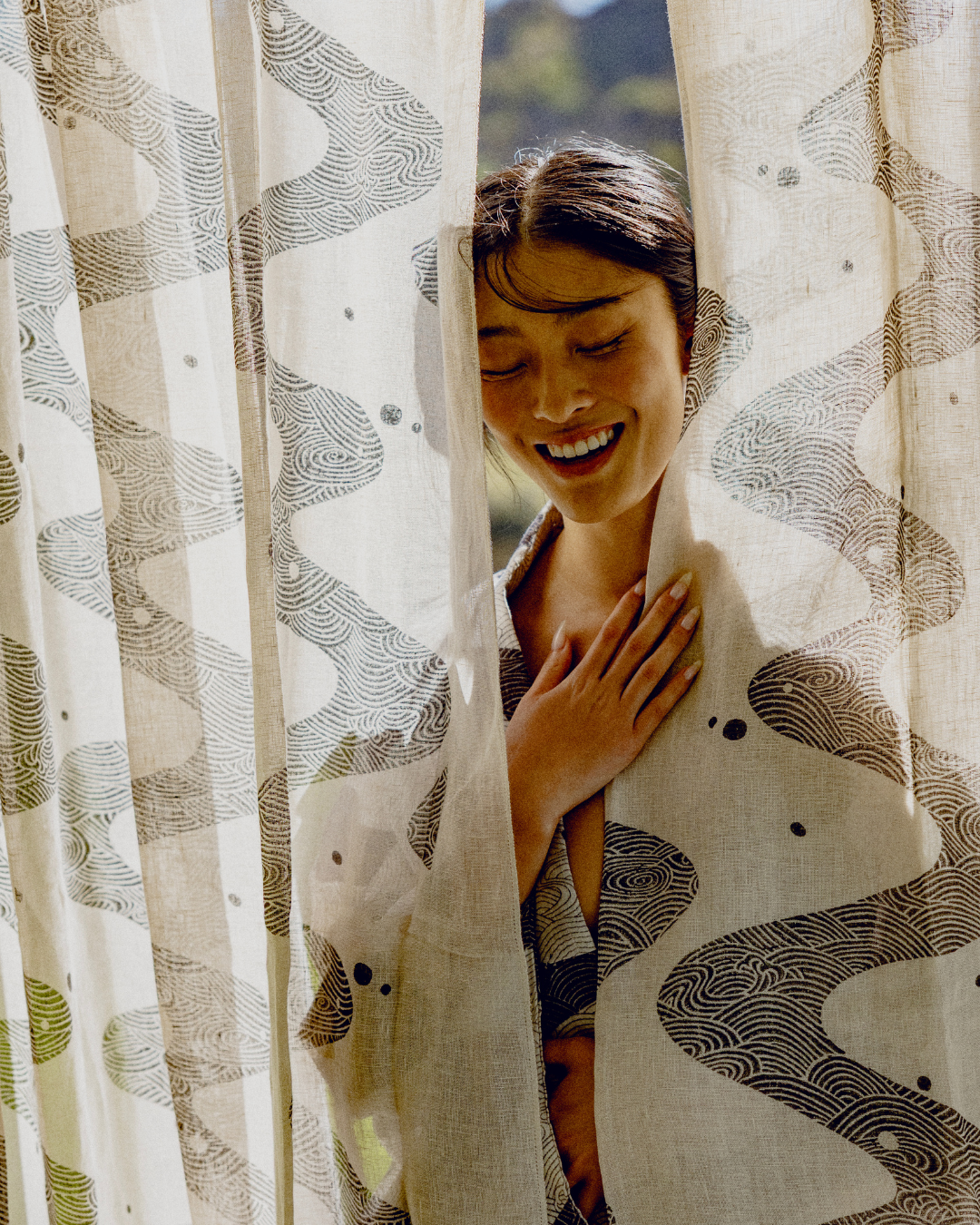
Impermanence drives the material expression of The Shadow of Flowers. Wooden blocks are carved by hand, soaked in mustard oil, and dried in the sun, imprinting an aged finish onto a rich linen ground. Indigo is dyed and discharged to reveal a collection of kamon, or family crests. Flowers are printed directly onto bare warp threads before being woven, allowing their edges to dissolve into a night sky. Linen absorbs dye unevenly, and we let that show.
The title takes inspiration from Zeami, the fourteenth-century actor and theorist who described the beauty created by a performer as hana, or “the flower.” For Zeami, beauty was inseparable from time: something cultivated, transformed, and ultimately, fleeting.
Impermanence drives the material expression of The Shadow of Flowers. Wooden blocks are carved by hand, soaked in mustard oil, and dried in the sun, imprinting an aged finish onto a rich linen ground. Indigo is dyed and discharged to reveal a collection of kamon, or family crests. Flowers are printed directly onto bare warp threads before being woven, allowing their edges to dissolve into a night sky. Linen absorbs dye unevenly, and we let that show.
The title takes inspiration from Zeami, the fourteenth-century actor and theorist who described the beauty created by a performer as hana, or “the flower.” For Zeami, beauty was inseparable from time: something cultivated, transformed, and ultimately, fleeting.