The Shadow of Flowers
By Sean Leffers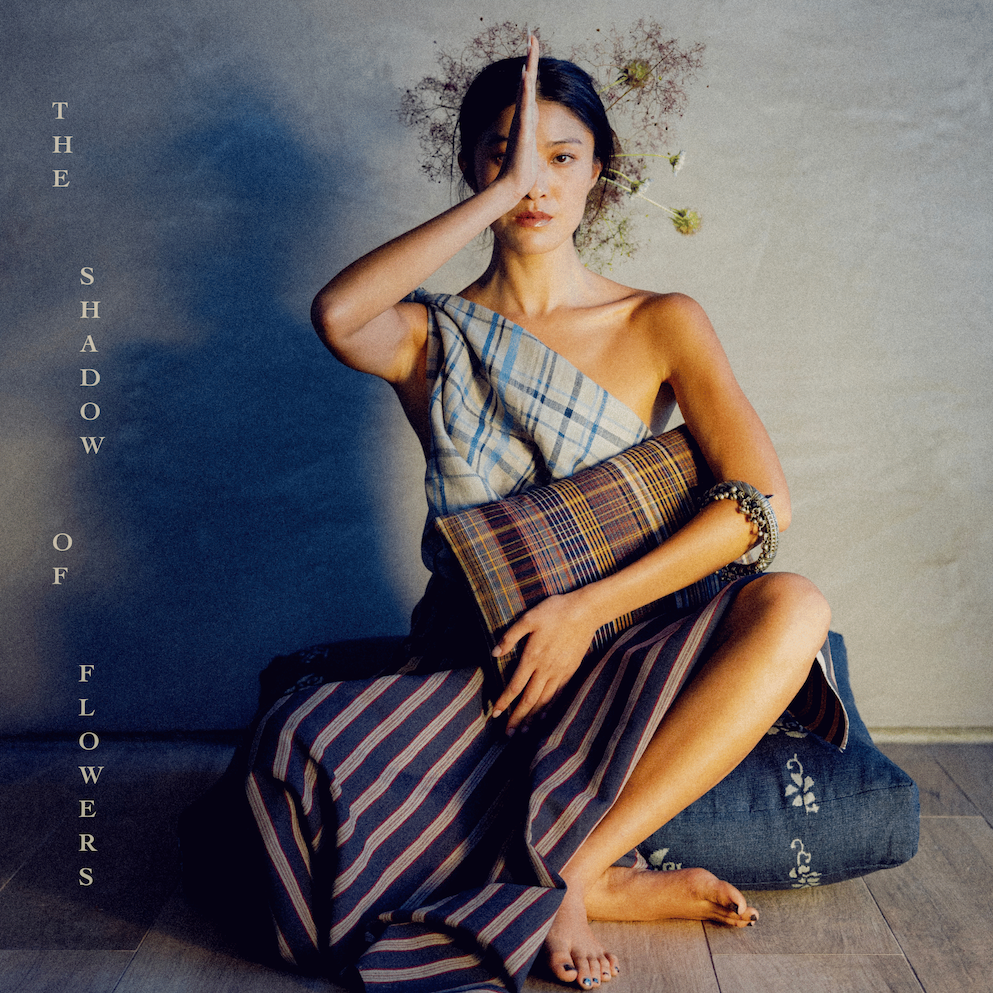
The demon plays go last.
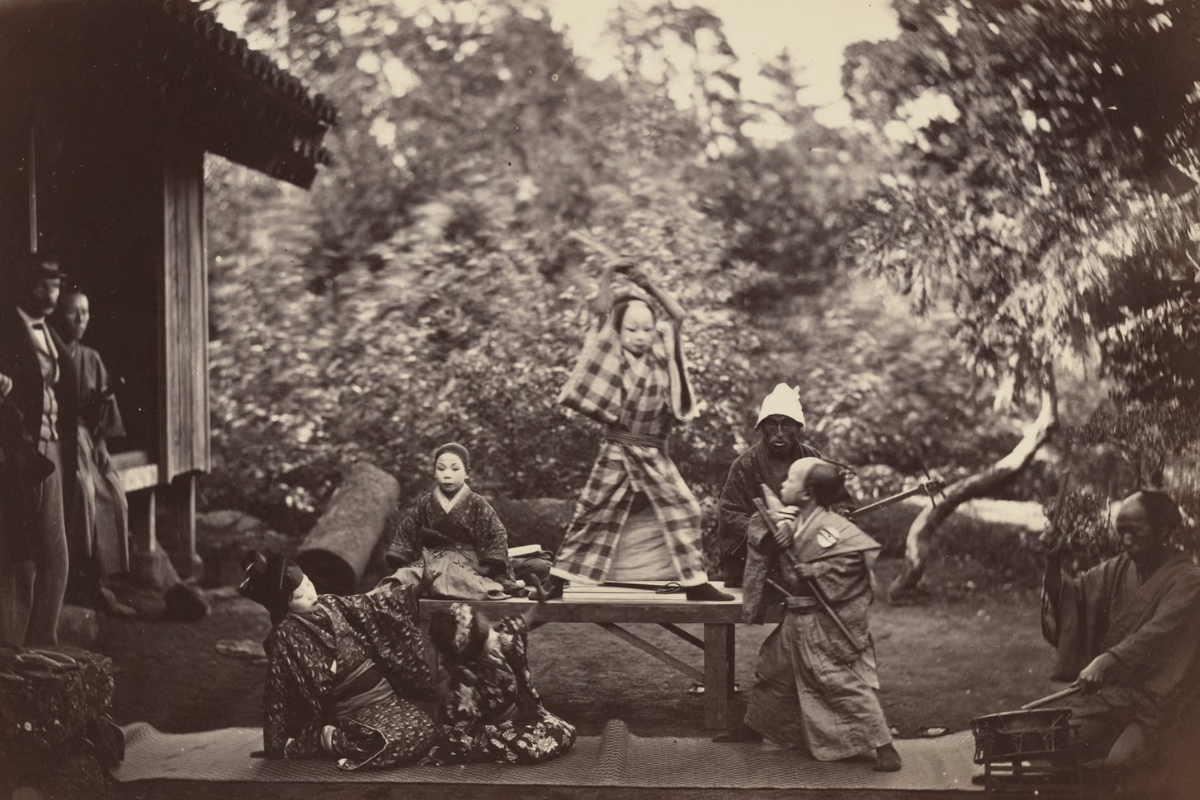
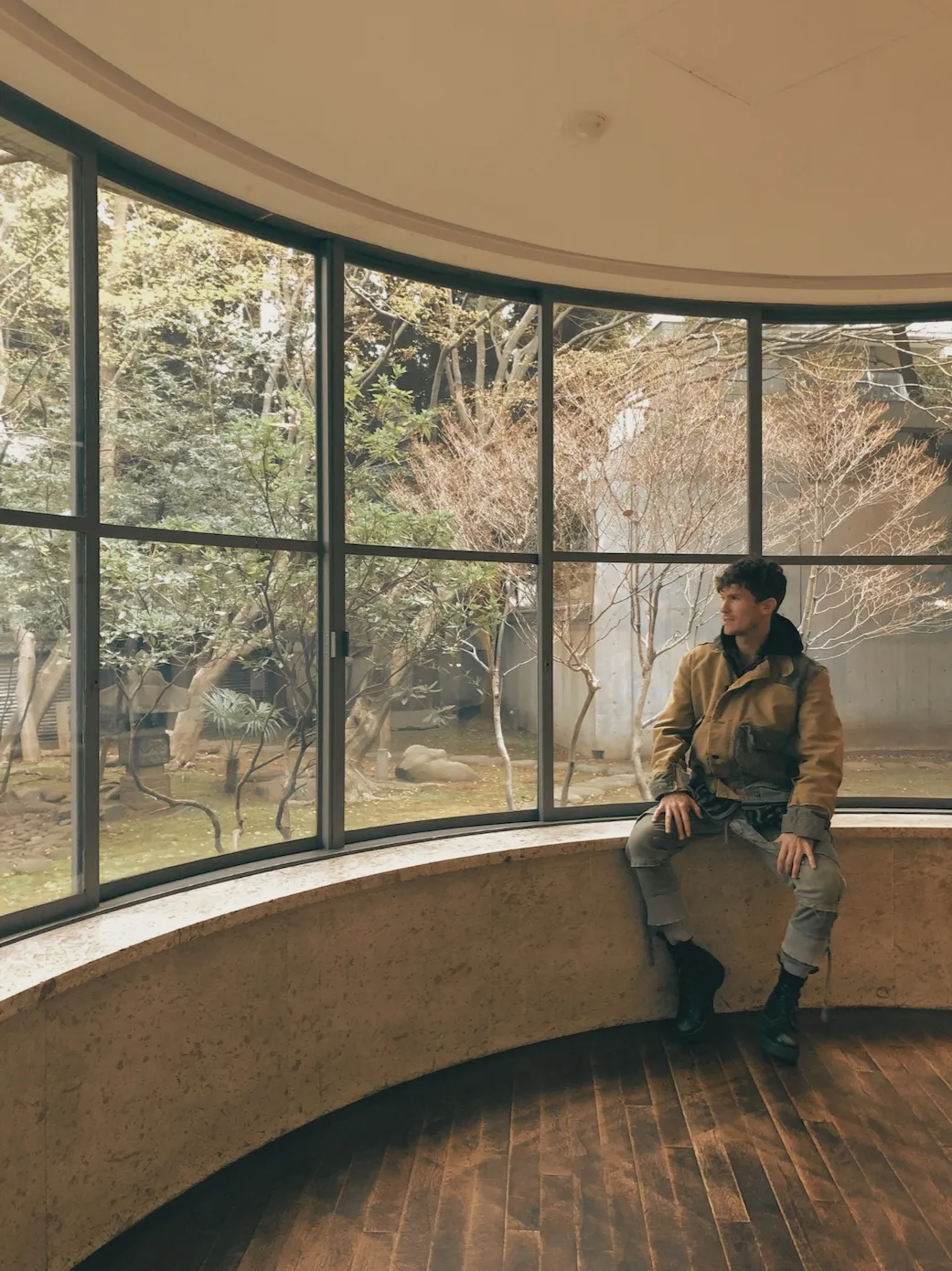
By the time the Nue began at the National Noh Theatre in Tokyo, I had been sitting for hours. It was my first visit to Japan. An old pine remained painted across the back wall, as it does whatever the play, and I had stopped expecting the stage to tell me where or when I was.
Then a monster arrived.
A long red wig half hid the mask, and nothing below it agreed with anything else. On his head was the crown reserved for gods and Chinese emperors. Under a broad-sleeved jacket cut for demons and patterned with lightning, he wore a fuchsia inner kimono and a pleated skirt in heavy gold brocade. Somewhere behind the curtain, before any of us saw him, the actor playing this creature had sat in front of a mirror and put on the mask. In Noh, that hidden room is already considered part of the stage. The performance begins before anyone is watching.
He reminded me immediately of the demon called No-Face in Hayao Miyazaki's film Spirited Away, gorging himself in the bathhouse, swallowing everything placed before him until he is monstrous with other people's appetites. Some of my earliest impressions of Japan came through Studio Ghibli films, and I grew up partly in San Francisco, around a good deal of Japanese American culture, so I arrived in Tokyo with the delusion that the place would not be completely opaque.
Surfaces had been on my mind long before that theatre.
When I first moved to Los Angeles I read The Tale of Genji standing behind the counter of the Taschen shop in Hollywood, where I worked. Murasaki Shikibu reminded me so much of Jane Austen, whose rules for navigating the world I had internalized as commandments when I was young. Both understood worlds in which enormous private desires had to pass through narrow channels of manners, rank, reputation and taste. I became sufficiently obsessed that I started adapting Genji into the story of a Los Angeles film dynasty: I imagined James Franco as the prince, Natalie Portman as Murasaki, and Tilda Swinton as Lady Fujitsubo, the studio boss. Somehow, shockingly, Sofia Coppola never replied to my script.
In the original Genji, identity lives at the surface. Women of rank sat behind screens, and often all a visitor could see were layers of multicolored silk sleeves, from which they read age, rank, season and taste. To those who were not permitted to see her, the details of her textiles were how she made herself seen.
I was reading all this in Hollywood, the world capital of manufactured identity, a place that makes stories about who we might become every day, at scale. I had moved from Indiana to California partly because it promised the opposite: escape from what I saw as social inauthenticity to a place where I could decide who I was. That freedom was real. But I had yet to understand that LA’s most convincing performance is the idea that it isn't performing at all.
In some ways, Japan has been no more immune to its own performances. In his first modern translation of the Genji in the 1930s, Jun'ichirō Tanizaki was forced to remove the affair that produced a secret imperial heir, because it conflicted with the state's insistence on an unbroken divine line of emperors.
Japan's masks might have been more legible to me because they weren't available to me.
Years later, on my second trip to Japan, in a small bar in Shinjuku Nichōme, I read Mishima's Confessions of a Mask. His narrator, Kochan, constructs an acceptable heterosexual identity with extraordinary care, trying to love a woman while knowing that what he really wants is the safety of ordinary life that she can offer him. Mishima would later give a novel the title Kinjiki, Forbidden Colours — a phrase borrowed from the old court dress code, where kinjiki were the colors one's rank forbade.
Kochan's mask is an injury. The role was imposed on him, and it costs him everything to wear it. Looking down the bar, the room was full of identities people had chosen, all with their own codes, styles, types and expectations, as any room has. A restrictive society prescribes identities more narrowly. A permissive one offers an enormous number to choose among. But neither can rid itself of performance. I checked my hair using my phone’s camera and kept reading.
The fact that an identity is performed does not make it false.
In Noh, the mask gives a character a face; the textile gives a character a biography. A mask may tell us only that a character is a young woman. Everything else — her age, her status, the state of her soul — is carried by cloth, and read at the collar, in stacked bands of dyed silk, the same grammar as those sleeve edges at the Heian court.
The combinations are prescribed. Within them the performer chooses his own colours and patterns, and chooses them against what everyone else on stage is wearing. The role is given. How it is inhabited is not.
Zeami, the actor and writer who shaped Noh into its classical form, called the beauty a performer creates hana: the flower. He distinguished the flower of the moment, the effortless beauty belonging to youth, from the true flower cultivated across a lifetime. The flower of youth is not a false flower. It moves people. The error is in mistaking it for something permanent.
He wrote all of this down in a manual his family kept secret for generations. His father Kan'ami danced at a shrine in Suruga fifteen days before he died. He was old, the technique that had made his name was gone, and he did very little on the stage. Everyone watching was moved. His son wrote that his father's art had few branches and leaves, but the flower had not yet scattered.
The masks we inherit, choose, resist and eventually discard make us. Then time changes the role again, including the truth that we had finally discovered. In the search for what lies beneath, we cannot forget that a person is also made out of the relationships, inheritances and choices through which they become visible to anyone at all.
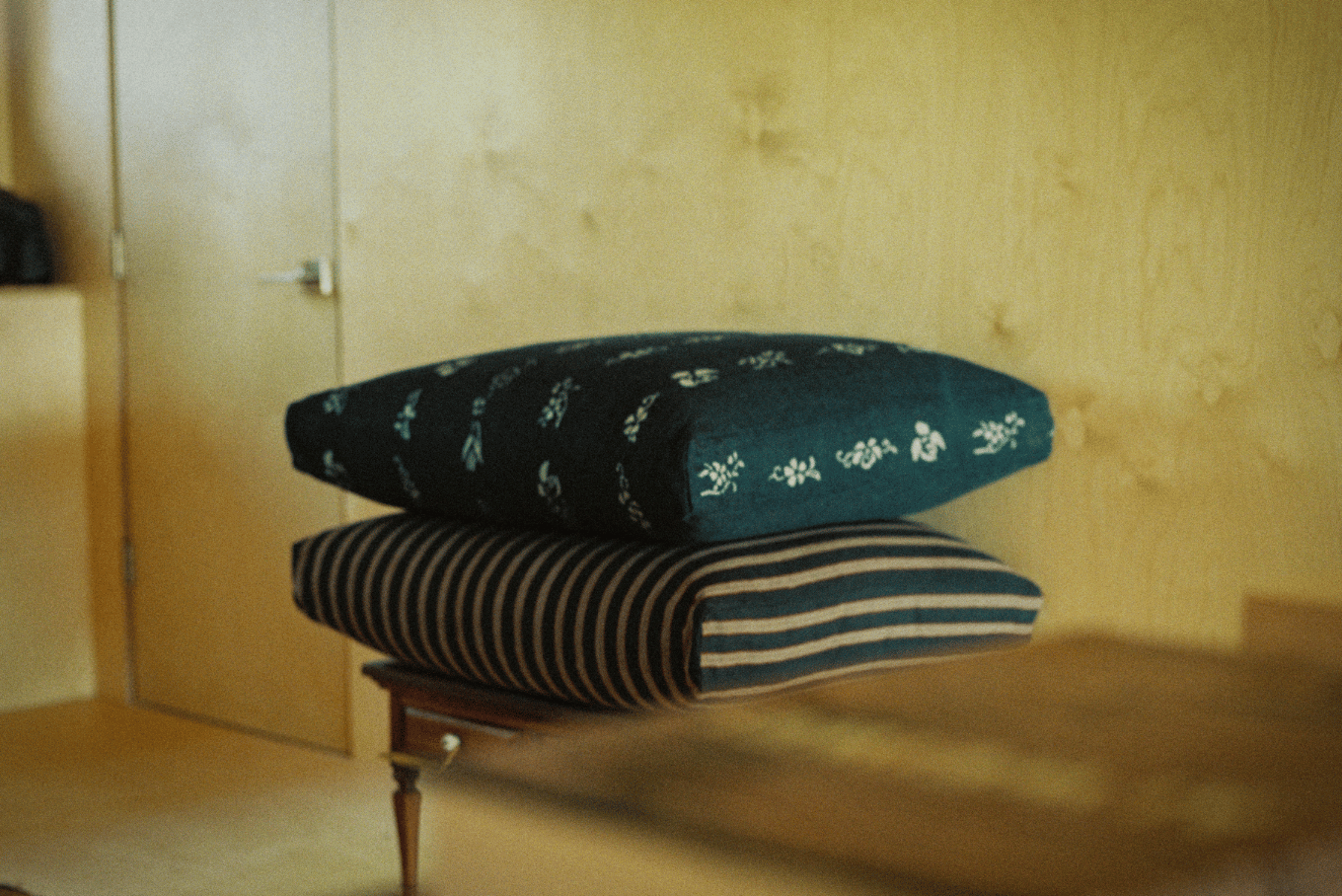
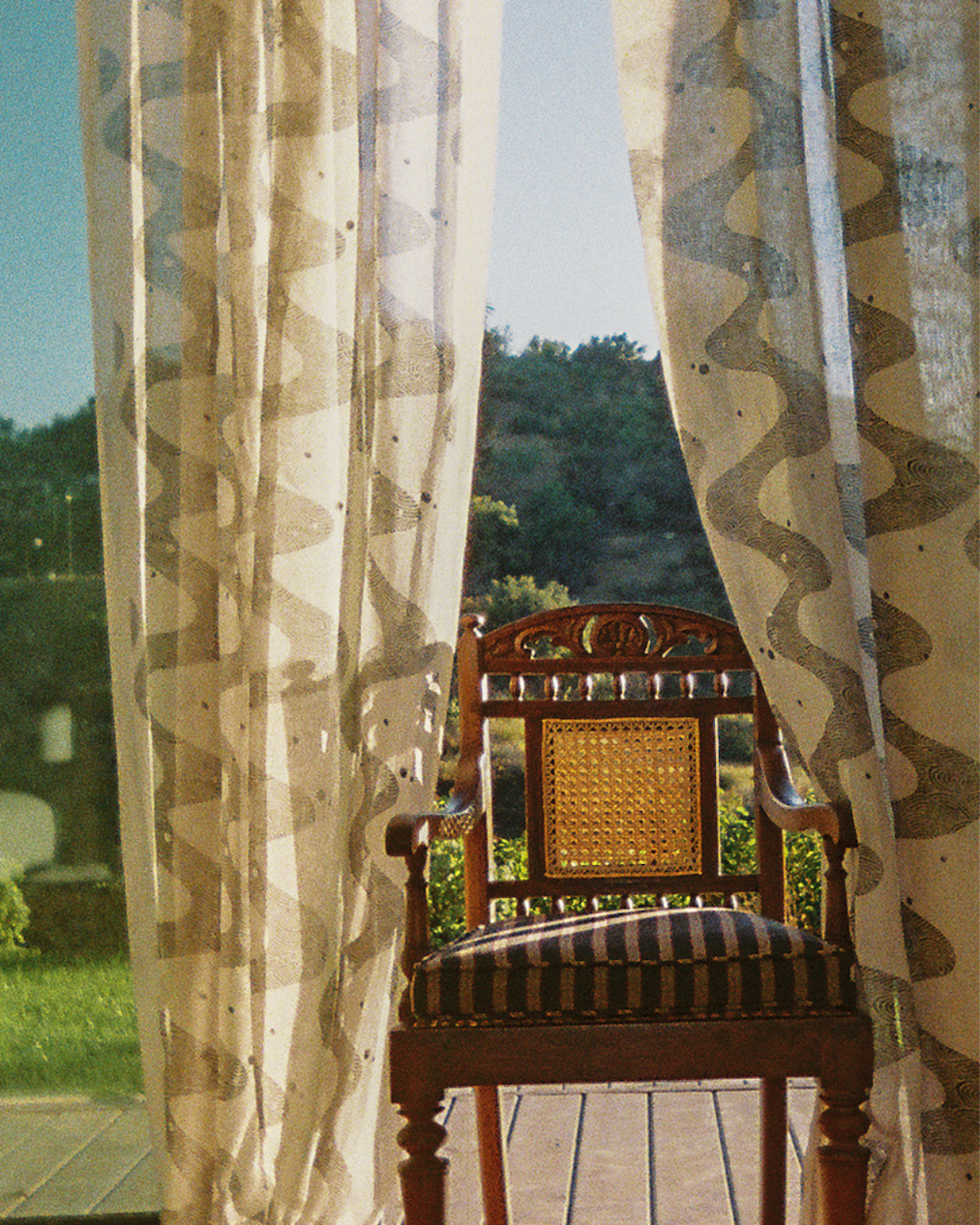
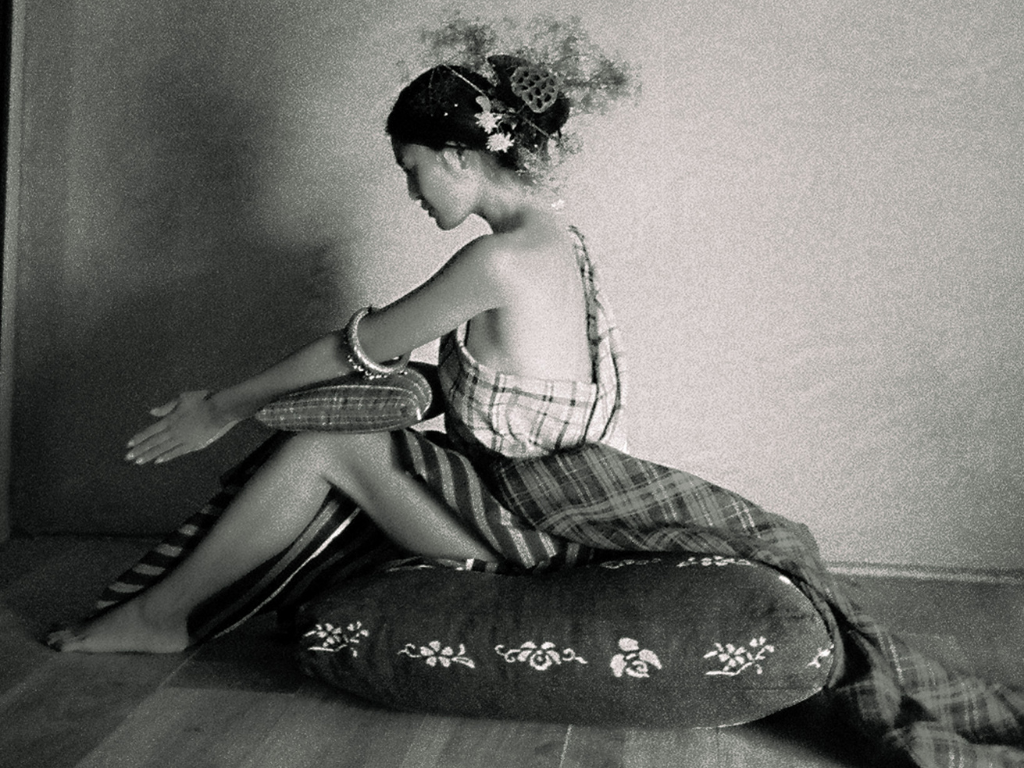
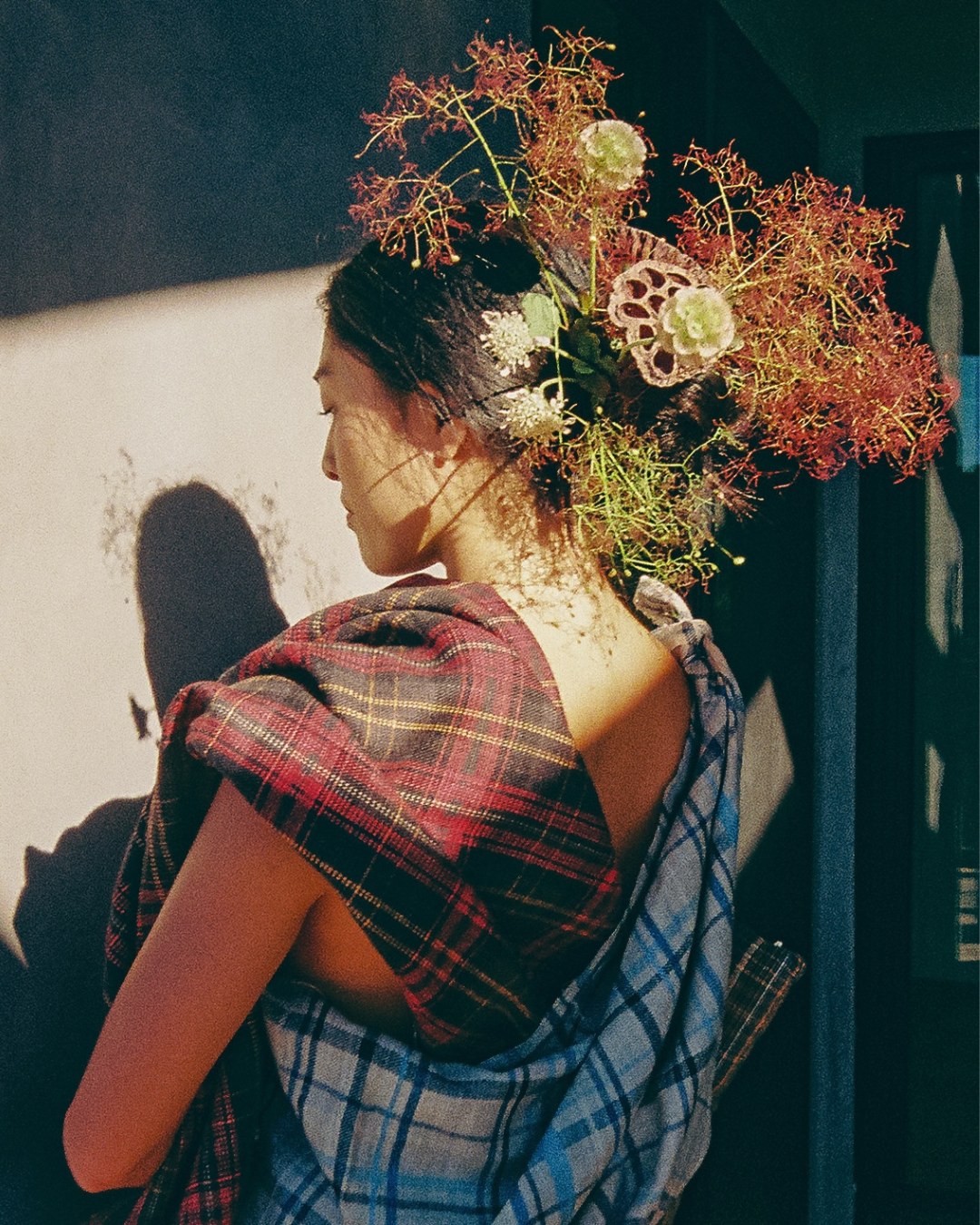
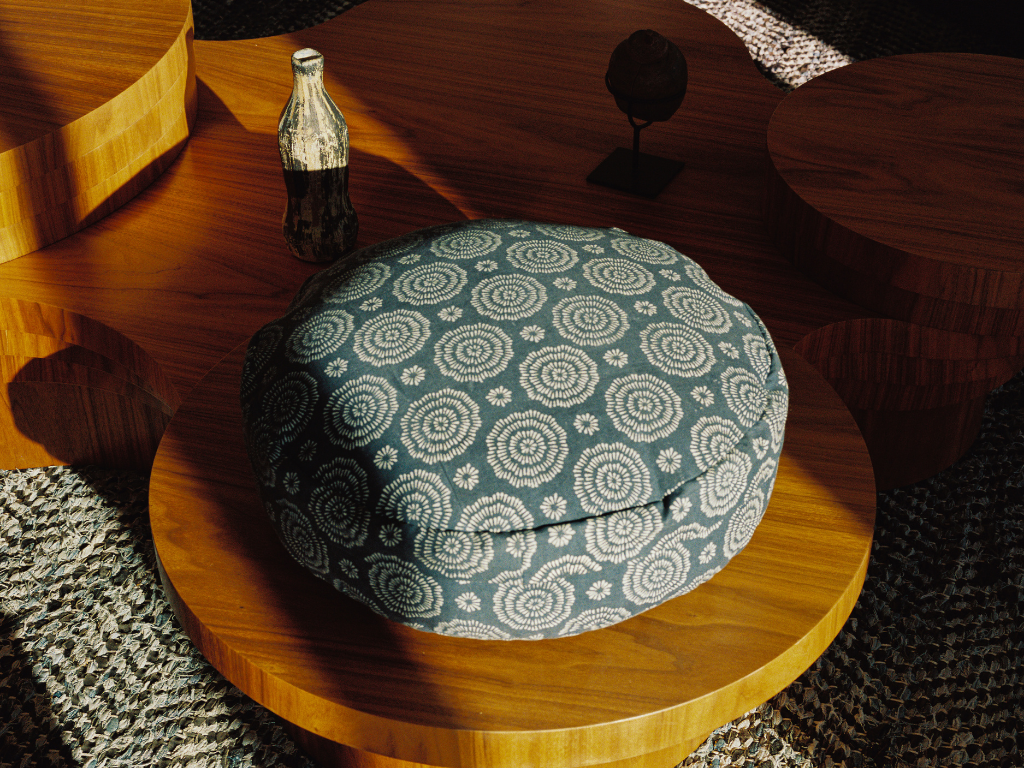
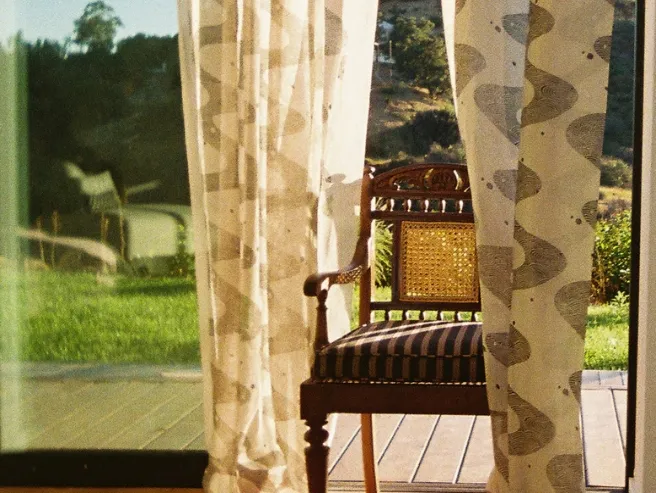
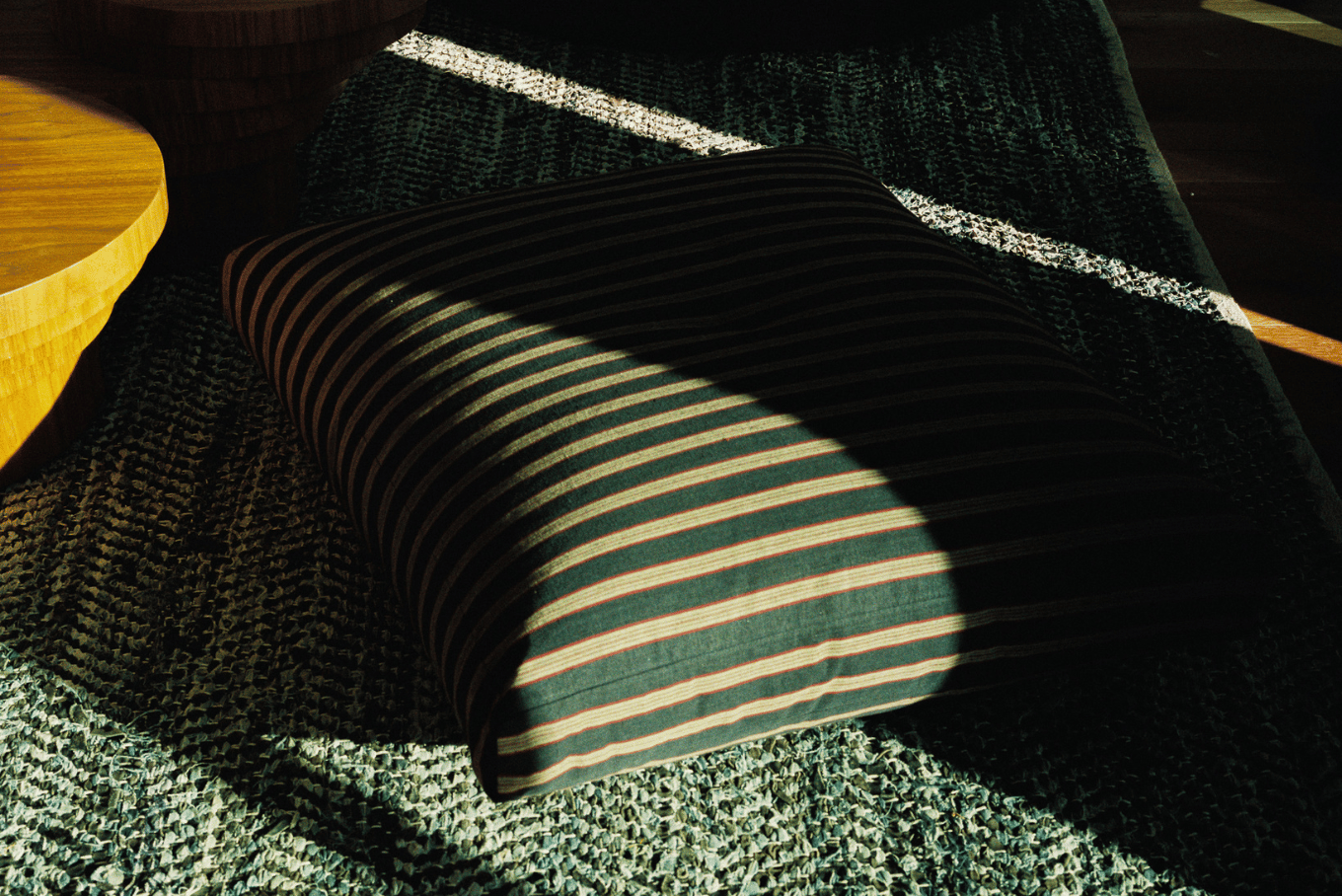
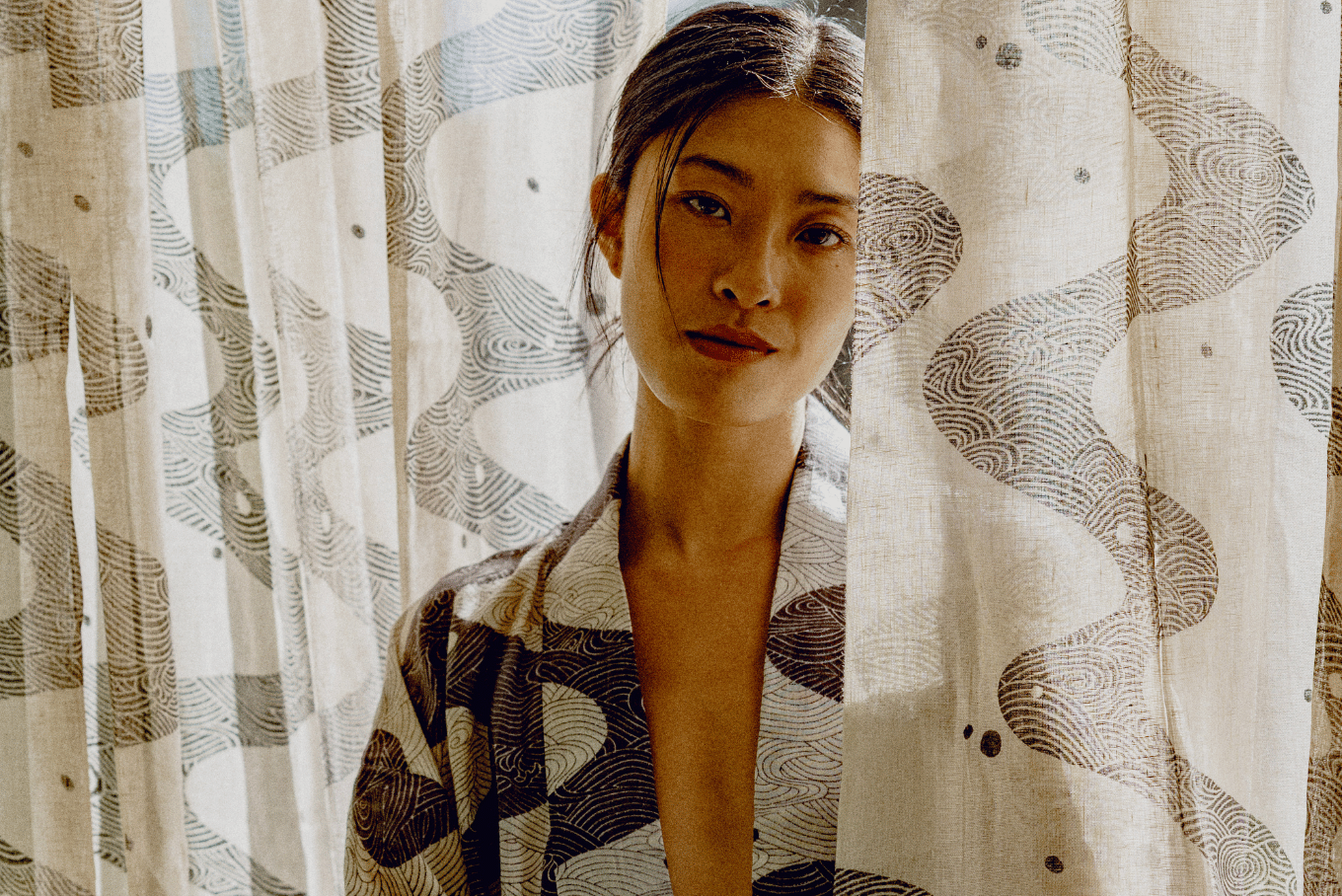
The textiles in this collection are based on historic Japanese cloth and garments: theatre costumes, a half-kimono covered in the crests of many different families, homespun domestic stripes, warp-printed florals, a vintage Japanese reinterpretation of an American bandana. Some are reproduced closely. Others move through interpretation, adapting a motif or a weave structure into a new composition. The names are a company of performers rather than a single narrative — the interval between acts, the travel sequence, the troupe, the gallery seats, the underground theatre of the 1960s, the flower districts, the forbidden colors, duty, outlaws, falling blossoms.
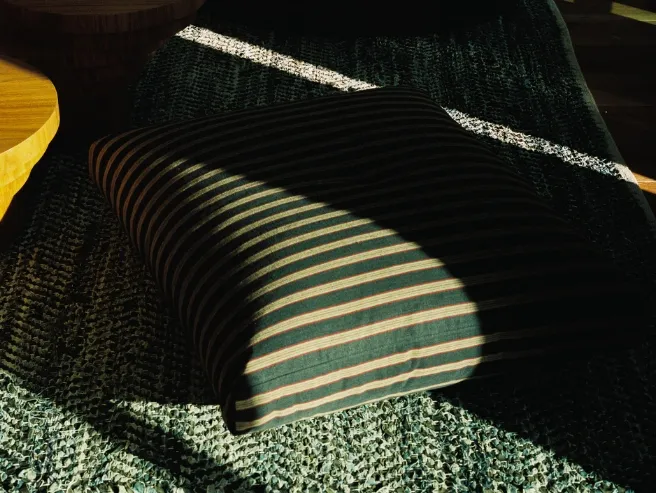
In one stripe, five yarn colors are dyed in hanks before the warp is planned and tensioned. Wooden blocks are traced, carved by hand, soaked in mustard oil for a week, sun-dried, and set one at a time. A ground color is dyed into cloth and then discharged to reveal a motif. Linen absorbs dye unevenly, and we let that show.
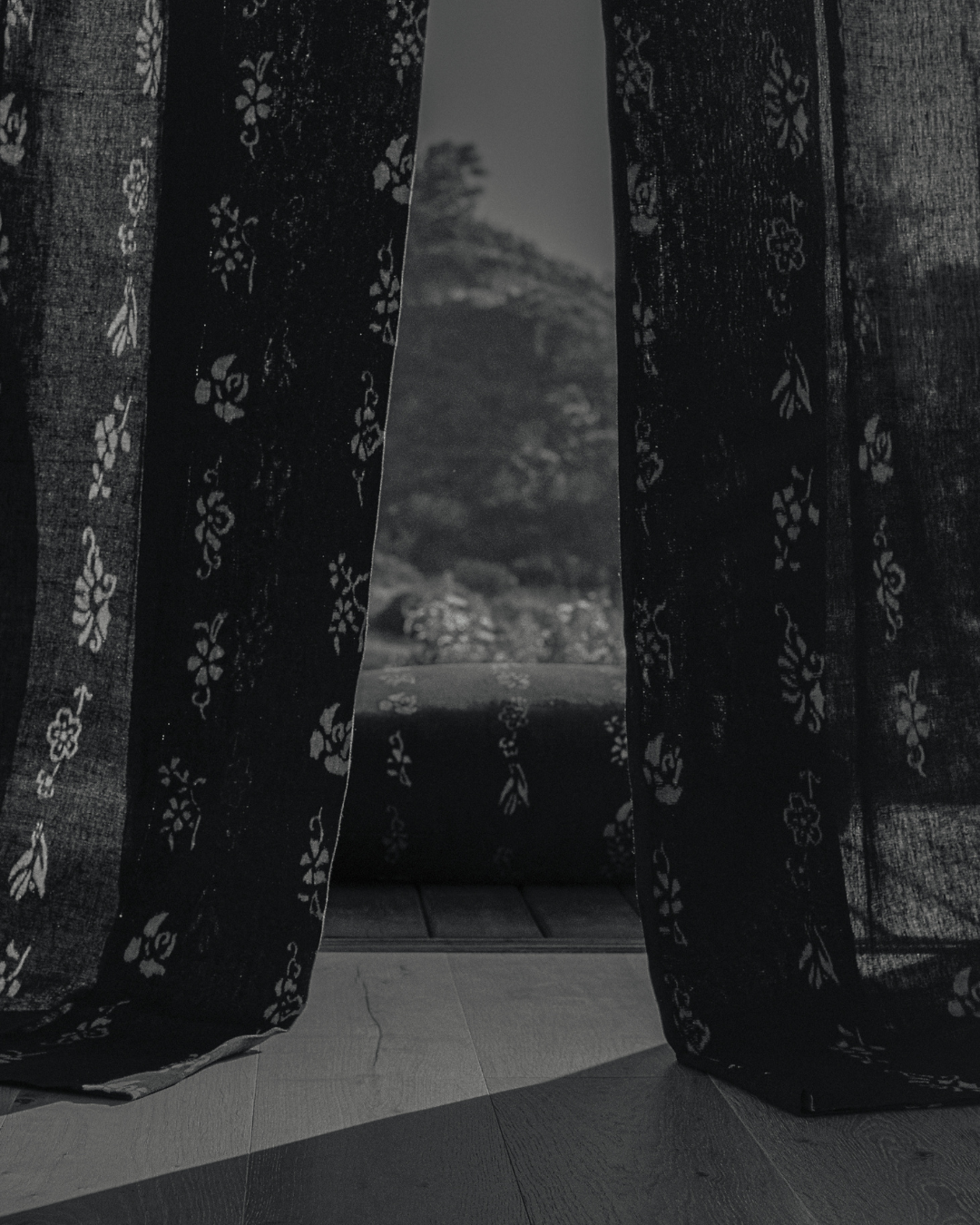
Two of the fabrics are printed before they are woven. A warp is stretched, the design is screen-printed directly onto those bare threads, and only then is the weft woven through them, so the image arrives slightly displaced, embedded in the structure rather than resting on the surface. One of them is called Hanachiru, falling blossoms. Its flowers dissolve as the cloth is woven.
Cloth keeps changing long after we are done with it. Indigo abrades along a fold. Linen softens under the hand. Colors deepen, or go. A garment outlives the person who wore it, and then, eventually, the language it once spoke fluently becomes difficult to read.
The flower scatters.
x Sean